
The Four Sciences
Moleconomics, Compatibilisation, Molecular Restructuring, and the Market Mechanics of Survival
John Harrison
October 2026
Summary
Humanity's survival depends on a fundamental shift in how we manage molecules and matter for long term survival and avoid the trap of short term thinking. Current economic and environmental frameworks conflate the tracking of resources with the engineering required to fix them, and there is systemic paralysis with not enough positive happening. This paper proposes a definitive, four science framework to achieve planetary homeostasis without relying on altruism or politics.
It separates the science of the ledger (Moleconomics) from the science of belonging (Compatibilisation), the tools of repair (Molecular Restructuring), and the financial drivers of implementation (Market Mechanisms). By applying driven electrochemistry and aligning corporate balance sheets with molecular reality, it outlines a pragmatic, highly profitable pathway to keep molecules where they belong and permanently circularise the global techno-process. If molecules are lost from the techno-process they are downgraded to be compatible with the Eco-Sphere
The Four Sciences
To survive the coming decades, we must hack the operating system of human nature. This means ceasing the futile attempt to rewrite human psychology and instead using existing wiring including self-interest, profit motives, loss aversion, and convenience to achieve ecological balance. We must align the ruthless pragmatism of the market with the laws of thermodynamics. Engineering an industrial tipping point where recovering matter becomes cheaper, faster, and more profitable than digging it up or dumping it will cause the immense creative and logistical power of global capitalism to pivot automatically. We can clean the planet not with kindness, but with greed.
To do this without losing the plot, we must strictly define the four distinct sciences for this transition:
1. Moleconomics: The Accounting System
Moleconomics is the foundational science of this closed system. It was originally defined as "the study of the form of atoms in molecules, their flow, interactions, balances, stocks, and positions" (Harrison, 2006).
Moleconomics does not judge; it measures. It is the accounting system of the planet. It tells us what molecules exist, where they are, what form they take, and in what quantity. Whether a carbon atom is locked in a factory, floating in the atmosphere as CO2, or circulating in the ocean, Moleconomics provides the empirical ledger of its existence.
2: Compatibilisation – The Science of Belonging
While Moleconomics provides the map, Compatibilisation provides the filter. It is the applied science of determining whether a molecule belongs where it is currently situated.
The crisis of the Anthropocene is a crisis of incompatible placement. We have manufactured "monstrous hybrids" (McDonough & Braungart, 2002) and synthesised forever chemicals that natural evolutionary systems have no enzymatic tools to digest.
Compatibilisation dictates that carbon in the form of a tree is perfectly compatible with the biosphere. However, carbon in the form of PFAS in the bloodstream of an Antarctic penguin, or microplastics in human tissue, is fundamentally incompatible. Likewise, atmospheric CO2 has become an incompatible stock, driving a catastrophic positive feedback loop. As temperatures rise, forests burn (Pyne, 2021), releasing more stored solar energy (carbon in trees) faster than the system can recapture it, driving further atmospheric incompatibility. Much of the Congo and Amazon are disappearing in this way.
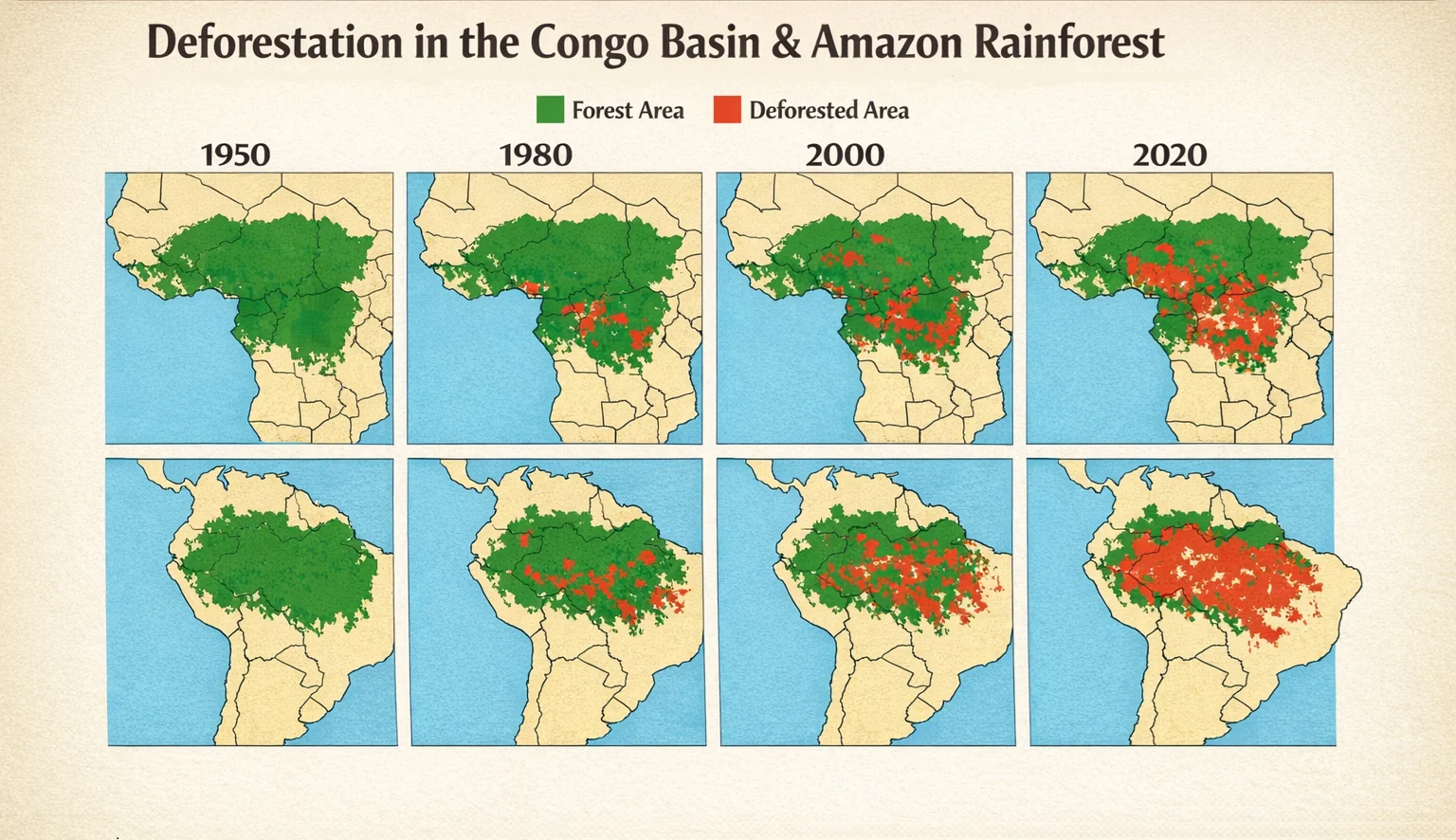
The rule of Compatibilisation is absolute: molecules incompatible with life must never be allowed to leak into natural spheres. They must be strictly contained within the technosphere or recycled into safe forms.
3: Molecular Restructuring – The Tools of Reassembly
When Moleconomics identifies a stock of incompatible molecules, and Compatibilisation mandates their removal, we require a tool to fix the error. We cannot rely on traditional thermal recycling, which requires brute-force energy that degrades materials, increases entropy (ΔS), and inflates operational costs (Georgescu-Roegen, 1971).
The science of restructuring molecules has recently been revolutionised by Driven Electrochemistry and Artificial Intelligence.
Driven electrochemistry applies an external voltage to force non-spontaneous, endergonic reactions (ΔG > 0) forward at room temperature. Powered by abundant renewable energy, it acts as a synthetic metabolic organ (Harrison, 2026). It allows us to cleanly cleave the stubborn, incompatible synthetic bonds of plastics and "forever chemicals" and restructure those atoms into safe, compatible forms without moving mountains of dirt to mine virgin ores.
Simultaneously, AI acts as the superfast sorter, using hyperspectral imaging to identify the specific molecular "handles" of waste streams, directing robotic disassembly with atomic precision.
4: Market Mechanisms – Making it Pay
The grand vision of 100% recycling and molecular balance fails without drivers. Altruism is not a scalable fuel source. To survive the times, we must develop market mechanisms that make keeping molecules where they belong undeniably profitable. The following five drivers turn molecular restructuring into a ruthless, self-sustaining economic engine:
Molecular Arbitrage (The Energy/Ore Crossover)
Traditional mining is highly energy intensive, and the rate of discovery and global ore grades are declining. Conversely, "Urban Mines" (e-waste, desalination brines) possess exponentially higher concentrations of target molecules and are increasing. As renewable energy drives daytime electricity costs toward zero, Driven Electrochemistry reaches a crossover point. The OpEx of restructuring molecules from waste becomes drastically lower than virgin mining. The profit is pure arbitrage and produces commodity-grade materials for a fraction of traditional costs.
Double-Sided Revenue Models (The Gateway Toll)
In a linear economy, companies pay tipping fees to dump waste. In a compatibilised economy, restructuring facilities get paid twice. For example, a Desalination-Sewage-Cement Hub receives municipal gate fees to take toxic sewage (ammonia) and captured industrial CO2. It runs these inputs through waste brine to precipitate magnesium and calcium carbonates. It is then paid again by selling the resulting Eco-Cements to the construction industry. Getting paid for both inputs and outputs creates unassailable margins.
Monetizing the Permanent Sink (High-Fidelity Carbon Credits)
The market for "biological" carbon credits (tree planting) is collapsing as forests succumb to bushfires. The market demands permanence. Eco-Cements offer permanent, mineralised sequestration. By locking carbon in thermodynamically stable stone, the construction industry can sell "High-Fidelity Sequestration Certificates." Tech and aviation giants will pay a massive premium for a 10,000-year guarantee, effectively subsidising the Eco-Cement and making it cheaper than highly-polluting Portland cement.
Supply Chain Sovereignty (The Geopolitical Premium)
As global conflicts peak, supply chains for critical minerals (lithium, cobalt, rare earths) are weaponized. Manufacturers will invest in closed-loop compatibilisation because it buys immunity from geopolitics. If a company retains custody of its molecules and uses electrochemistry to endlessly recycle them, it secures total independence from hostile nation-states and price volatility.
The Balance Sheet Flip (Leasing Molecular Capital)
If a company sells a product, they must buy raw materials to make the next one, losing their atomic capital. Under the "Performance Economy" (Stael, 2010), companies lease the utility of a product but retain ownership of the molecules. Over time, their raw material purchasing costs drop to near zero as they build a massive "Molecular Inventory." They simply use driven electrochemistry to restructure their existing asset pool, achieving profit margins traditional manufacturers cannot match.
Conclusion: The Age of Maintenance
Surviving the times will be about learning how to keep molecules where they belong, and building the market mechanisms to pay for doing so. By separating the science of tracking (Moleconomics) from the rules of belonging (Compatibilisation), deploying the right tools (Molecular Restructuring), and fuelling it with financial pragmatism (Market Mechanisms), we transition from a fragile extractive society to a resilient, closed-loop civilisation. The era of Conquest is over; the Age of Maintenance has begun. May it proceed rapidly.
References
Boulding, K.E. (1966). The Economics of the Coming Spaceship Earth. In H. Jarrett (Ed.), Environmental Quality in a Growing Economy. Baltimore: Resources for the Future/Johns Hopkins University Press.
Georgescu-Roegen, N. (1971). The Entropy Law and the Economic Process. Cambridge, MA: Harvard University Press.
Harrison, J. (2006). Gaia Engineering: The Tececology of the Future. TecEco Pty Ltd.
Harrison, J. (2026). Technospheric Compatabilisation: Driven Electrochemistry, Molecular Harvesting, and Automated Operant Economics for Earth System Homeostasis.
Hawken, P. (1993). The Ecology of Commerce: A Declaration of Sustainability. New York: HarperCollins.
McDonough, W. & Braungart, M. (2002). Cradle to Cradle: Remaking the Way We Make Things. New York: North Point Press.
Pyne, S.J. (2021). The Pyrocene: How We Created an Age of Fire, and What Happens Next. University of California Press.
Stahel, W.R. (2010). The Performance Economy. 2nd ed. Basingstoke: Palgrave Macmillan.